Online advertising sprays data everywhere
Every tool or system that interacts with that lead creates a copy of some or all of the lead's personal data. But you're accountable for it
Published May 2026. Last updated July 2026.
I started my working life as a civil engineer. I was lucky to have a boss who was a fantastic mentor and put a lot of effort into my development.
He gave me opportunities that many juniors never see.
One was to be a fly on the wall during failure investigations. The firm would be hired to investigate why an embankment had slipped, a retaining wall had collapsed, or a building had developed cracks.
My mentor was always rigorous. He never made a snap judgement, even if the cause looked obvious. He ran every test, did every calculation and brought in outside experts if needed.
He took me with him to the field and to meetings with these experts. I'd listen at lunch to some professor while they discussed smectite clays and soil liquefaction.
Years later I found myself working with Google Ads. Without thinking about it, I adopted his approach to investigating campaign performance issues.
In 2018 I wrote Diagnosing AdWords to help other people do the same.
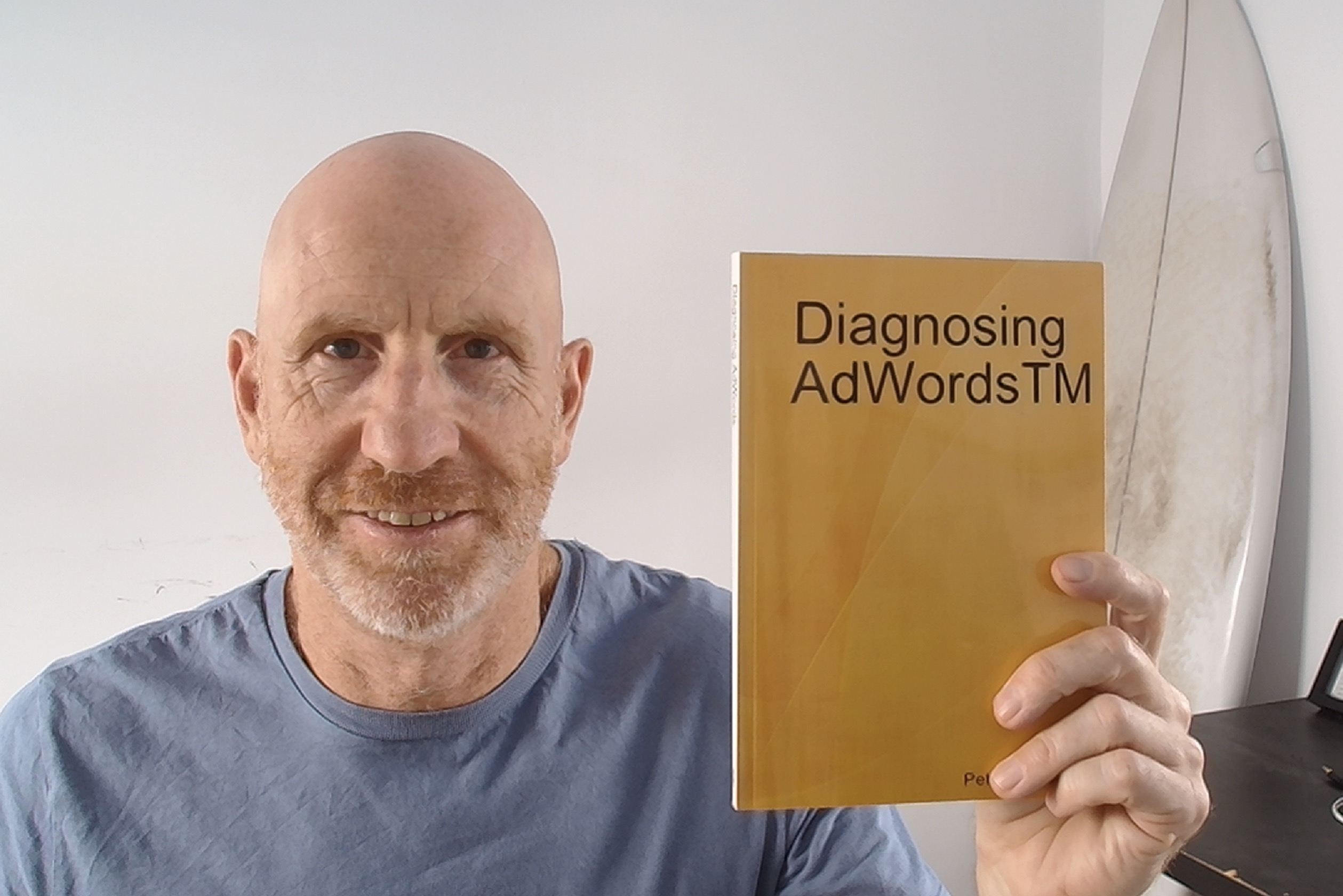
The premise was that there were a finite number of explanations for why some metric could change. For example, there were 16 possible causes of a drop in impressions. No more.
You got to the root cause by starting at the top of the list and excluding the possibilities that didn't apply. Then you changed what was needed and performance got back on track.
It worked because although Google Ads wasn't simple, you could reason about it. There was cause and effect.
It would be impossible to write that book today.
If you sent 500 old-school exact-match, bottom-of-funnel clicks to a landing page and didn't get any conversions, the reason would almost certainly be something after the click: the page, the form, or the conversion tracking.
But 500 Performance Max clicks? Who knows?
Those visitors could be urgent buyers, people doing research, or a kid watching videos on her mum's phone.
Poor performance could be the landing page or something downstream. Or it could be traffic quality, traffic temperature, or the offer in the ad. Or it could be some combination.
Google Ads has changed from a machine with (mostly) predictable inputs and outputs into a black box. Smart bidding, broad match and automated assets have made it close to impossible to reason about the link between what we do and the results we see.
That's uncomfortable for an engineer.
And it gets worse.
The ad account is only part of the system. There are landing pages, forms, call tracking, conversion tracking, speed-to-lead, the sales process, the offer, follow-up and more.
Each part introduces uncertainty. Each part could be the reason your ads aren't as profitable as you'd like.
It's a collection of black boxes strung together.
Every black box multiplies the number of explanations. So now, instead of 16 reasons for a drop in impressions, there are hundreds. Most are untestable.
In retrospect, much of the work I've done over the years has been about removing black boxes.
It feels like every time I've replaced a black box with something I could reason about, my work has become easier.
I haven't got rid of uncertainty. That's never going to happen because markets change, people are unpredictable and Google hides more every day.
But replacing black boxes makes it easier to figure out what happened when something goes wrong.
You don't have to understand everything. You just need fewer places where the answer might be hiding.

Every tool or system that interacts with that lead creates a copy of some or all of the lead's personal data. But you're accountable for it
Discussions about the future of Google Ads usually start with what’s announced: new features, calling everything Max-this or AI-that. But often this is PR hype. I prefer to look at where Google continues to invest engineering effort over many years. It gives a clue to what the system will depend on in the future.
When I started with Google Ads in 2007, it was cheap. You could get away with a sloppy setup. That's not true today. Ads are expensive. You can't expect to be profitable if you haven't done everything in your power to get the setup right.
After building a lead-handling system that turned $8k in ad spend into $200k, I thought I knew what small businesses needed. I was wrong. This is the story of a good idea, a bad assumption, and what I learned about the real challenges of getting people to change.
One thing still amazes me: people pay for my advice - then ignore it completely. Sometimes they'll dismiss my suggestions without a second thought. Here's how I fix it.
I recently came across the work of user experience designer Pavel Samsonov. He shared three thought-provoking questions that really cut through the fluff.
Thoughts and lessons on client selection, burnout, pricing, and modernising legacy accounts, from someone who's run a Google Ads for years.
Understand what happens after someone clicks your advert. Subjects include offline conversions, CRM integration, attribution, auditability and marketing instrumentation.
Articles about marketing, engineering, AI and problem solving that don't fit neatly into the other topics. These are some of the ideas and experiences that have shaped how I think.
How to choose the right Google Ads agency, set them up to succeed, judge their work fairly, and build a relationship that delivers better business results.
Learn how to use Google Ads to generate profitable leads. Subjects include campaign strategy, bidding, targeting, optimisation and the challenges of running lead generation campaigns.
Understand why some leads become customers while others don't. Subjects include diagnosing poor leads, qualification, filtering junk leads and improving the feedback you send to Google Ads.
Things I've learned about high-converting landing pages. Subjects include copywriting, page structure, forms, trust, conversion rate optimisation and user experience.
What happens after a lead has been generated determines if Google Ads is profitable. Subjects include first contact, follow-up, quoting, lead nurturing and turning more enquiries into customers.