Too cheap to trust?
You see a better price and faster service. Your customer might see cutting corners.
Published March 2025. Last updated March 2025.
Unlike everyday purchases like bread or Netflix, some services are only needed once or twice in a lifetime. A few examples:
Contracting for these services is stressful because we don't do it every day.
People click on ads for plumbers, lawyers and medical specialists on Google but when they get to their sites they don't contact them. That's because people need to be confident about three things before they’ll work with you:
Most landing pages do a little of the first, lean heavily on the second, and completely ignore the third.
That last one—making it clear that working with my clients won’t be a nightmare—is something I’ve been focusing on in my quest to build the best Google Ads landing pages on earth.
I do this through the process section of the page. This section shows visitors how my client will take them from their current (unhappy) situation to the outcome they want.
I've tried different ways of structuring this part of the page. I was never really happy with any of them till I came across a simple three-step framework. It gives potential clients a clear, reassuring path from where they are now to where they want to be.
Here’s how it works:
It’s probably easier to show than to explain, so here’s a screenshot from a masonry contractor I run Google Ads for.
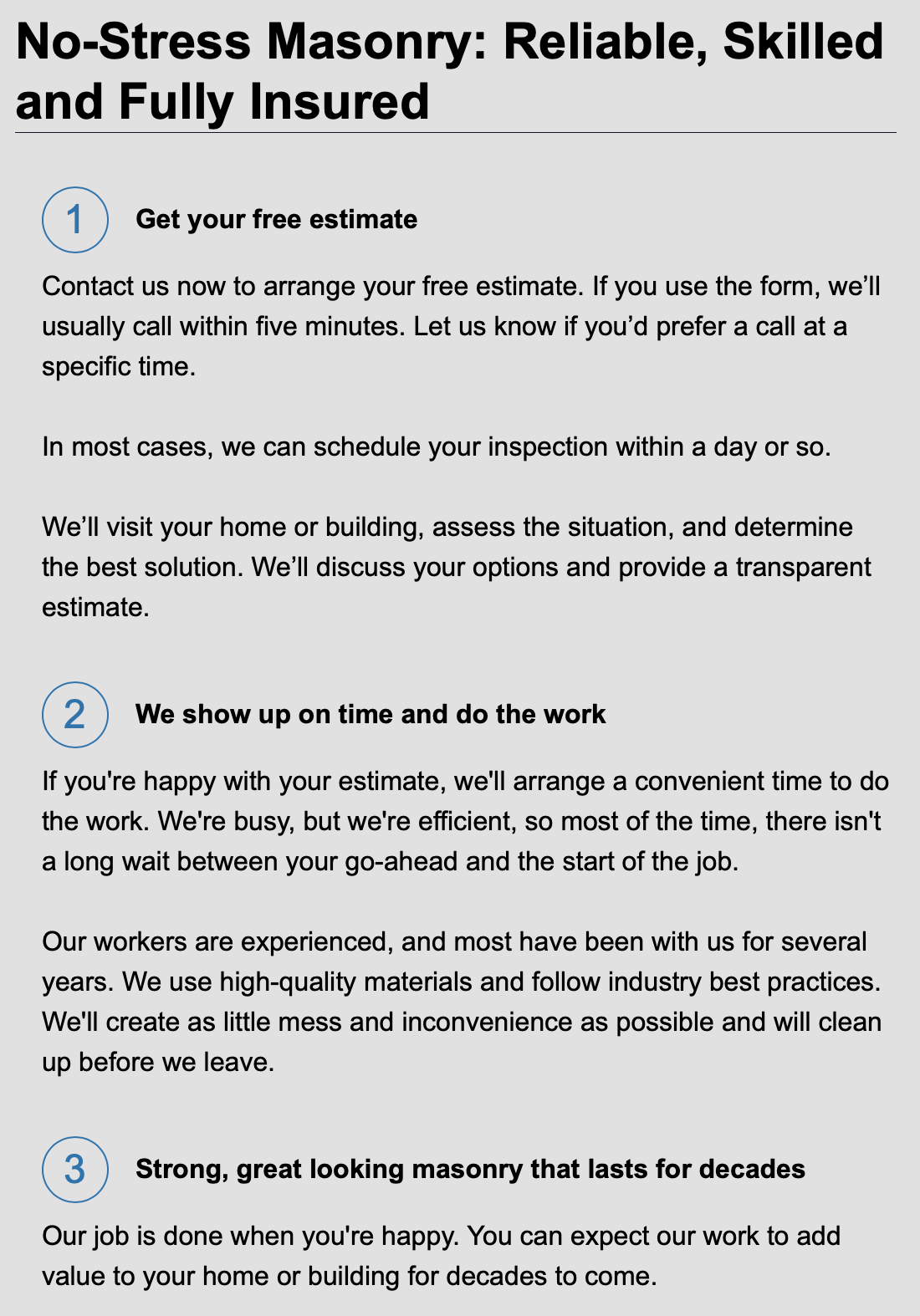
The headline acknowledges the client's situation. Many homeowners looking for masonry repair just discovered their mortar is failing and causing leaks. They’re stressed. So we call it out directly: No-Stress Masonry.
We also tackle common concerns:
The steps are designed to reassure the visitor and get them to take action:
Most business owners know their trade inside out, but they struggle to see things from their customer’s perspective. This is where ChatGPT can be a great tool for coming up with ideas.
Here’s an actual example of how I used it to brainstorm the process section for a different client: https://chatgpt.com/share/67d2cb70-2e6c-8006-ab7d-8d90bf3f9d55
And here’s what the final version looks like.
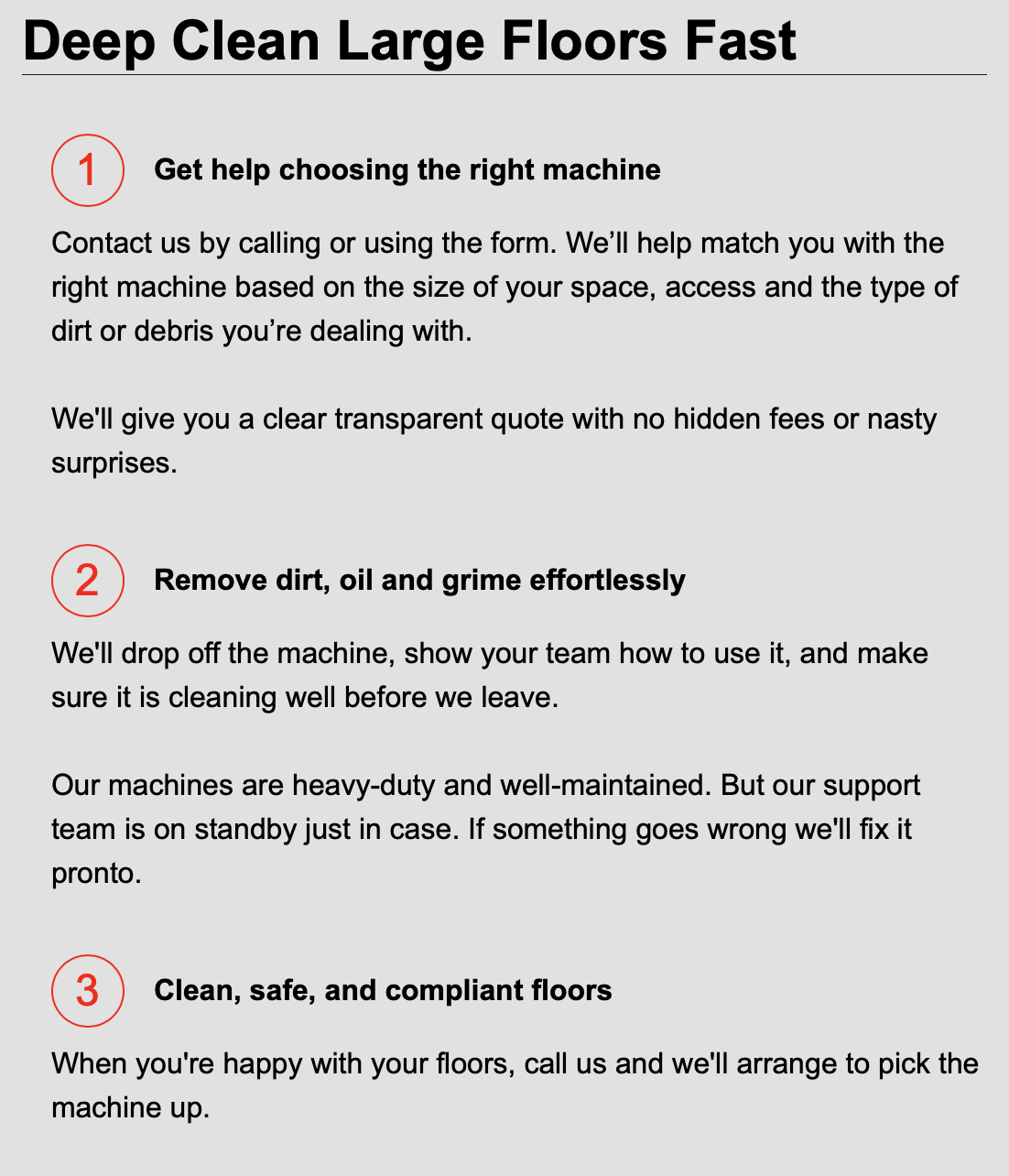
I haven't tried to measure if adding a process section improves conversion rate, but I think it's worth adding anyway. It’s a simple tweak, but it can be the difference between a visitor clicking away and actually reaching out.

You see a better price and faster service. Your customer might see cutting corners.
You get the best results when you match your ad's hook to the landing page
Before a stranger will convert to a lead they need to believe four things.
Coming up with ideas for an interesting company profile is hard. Here's how to avoid staring at an empty screen.
2FA can reduce contact form spam—but it adds friction, risks real leads, and opens the door to scams like SMS pumping.
I consulted with six businesses that handle complex paperwork for their clients - such as travel documents, business registrations, and tax filings etc. Here's how we improved the conversion rate.
Thoughts and lessons on client selection, burnout, pricing, and modernising legacy accounts, from someone who's run a Google Ads for years.
Understand what happens after someone clicks your advert. Subjects include offline conversions, CRM integration, attribution, auditability and marketing instrumentation.
Articles about marketing, engineering, AI and problem solving that don't fit neatly into the other topics. These are some of the ideas and experiences that have shaped how I think.
How to choose the right Google Ads agency, set them up to succeed, judge their work fairly, and build a relationship that delivers better business results.
Learn how to use Google Ads to generate profitable leads. Subjects include campaign strategy, bidding, targeting, optimisation and the challenges of running lead generation campaigns.
Understand why some leads become customers while others don't. Subjects include diagnosing poor leads, qualification, filtering junk leads and improving the feedback you send to Google Ads.
Things I've learned about high-converting landing pages. Subjects include copywriting, page structure, forms, trust, conversion rate optimisation and user experience.
What happens after a lead has been generated determines if Google Ads is profitable. Subjects include first contact, follow-up, quoting, lead nurturing and turning more enquiries into customers.